
Nuakhai: Odisha’s Festival of Gratitude, Unity and Heritage
By Dr Satyajit Nayak, IPS
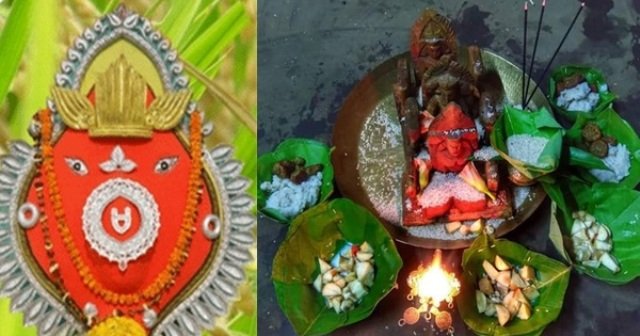
CUTTACK, SEP 13 : Nuakhai is far more than a festival of the new harvest. It is an expression of gratitude to nature, a celebration of the dignity of agricultural life, a reaffirmation of family bonds and a powerful reminder of Odisha’s enduring cultural identity. Rooted deeply in the agrarian traditions of western Odisha, Nuakhai brings together faith, food, family and community in a celebration that has retained its emotional strength even as society around it continues to change. The word “Nuakhai” is derived from two words: “Nua”, meaning new, and “Khai”, meaning to eat. In its simplest sense, it refers to the ceremonial consumption of the season’s first rice. But behind this seemingly simple tradition lies a profound philosophy. The first produce of the land is not consumed casually. It is first offered to the presiding deity, acknowledging that human prosperity ultimately depends upon nature, the soil, water, the farmer and the collective labour that brings food from the field to the household .In an age of rapid urbanisation and technological advancement, this message has acquired renewed relevance. Nuakhai reminds us that behind every meal lies the work of countless hands and the generosity of the earth.
A Festival Rooted in Agriculture
For generations, the rhythm of life in western Odisha has been closely connected with agriculture. The arrival of the new crop has traditionally represented hope after months of hard work, uncertainty and dependence on the monsoon. Nuakhai emerged from this agricultural reality and gradually developed into one of the most important cultural festivals of the region The festival is observed after the new paddy harvest becomes available. Before families partake of the new rice, it is offered to the deity during an auspicious period. This ritual reflects a simple but profound principle: the first share of prosperity belongs to the divine. The farmer, therefore, occupies an important symbolic place in Nuakhai. The festival honours not only the harvest but also the patience and labour that make the harvest possible. It acknowledges the uncertainty faced by farming communities and celebrates the hope that accompanies a successful agricultural season. In this sense, Nuakhai is both spiritual and social. It connects the individual with the community and the community with the land.
The Joy of Coming Home
Perhaps nowhere is the emotional power of Nuakhai more visible than in the movement of people returning home. For many Odias living in cities across India and abroad, the festival is an occasion to reconnect with their ancestral villages and families. Modern life has created new opportunities, but it has also created physical distances between parents and children, siblings and relatives, villages and their younger generations. Nuakhai temporarily bridges those distances. Homes that may remain quiet for much of the year become filled with conversation, laughter and familiar faces. Relatives travel long distances to be together. Children who have grown up in cities discover the traditions of their ancestral homes. Elders share memories and customs with younger generations. Thus, Nuakhai is not merely about eating the new rice. It is about sharing the newness of the season with those who matter most. The festival demonstrates that cultural traditions can serve as powerful bridges between generations. A young person living far from Odisha may not participate in every traditional practice throughout the year, but Nuakhai can reconnect them with the language, food, music, rituals and memories of their roots.
Food as a Cultural Memory
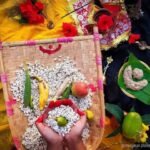
Food occupies a central place in the celebration. Traditional dishes prepared for Nuakhai carry the flavours of Odisha’s rural heritage. The new rice is prepared and offered according to local customs, while families prepare a variety of traditional delicacies. Food in this context is more than nourishment. It is cultural memory. Recipes passed from grandparents to parents and from parents to children preserve stories of place and community. The preparation and sharing of traditional food create a sense of continuity between generations. The meal following the ceremonial offering is therefore a deeply symbolic one. It represents gratitude, abundance and sharing. The first taste of the new harvest becomes a collective experience rather than an individual act.
Nuakhai and the Spirit of Unity
One of the most beautiful features of Nuakhai is its ability to strengthen social harmony. During the festival, people come together irrespective of their occupations and social circumstances. Families visit one another, elders bless younger members, neighbours exchange greetings and communities participate in collective celebrations.
The festival reinforces the traditional practice of Nuakhai Bhet, in which people meet and exchange greetings after the ceremonial consumption of the new harvest. The practice reflects the spirit of reconciliation, affection and social togetherness.
In a society that is increasingly fast-paced and individualistic, such traditions have special value. Nuakhai reminds us that a community is sustained not only by economic relationships but also by trust, affection, mutual respect and a willingness to share happiness.
It is a festival in which prosperity finds meaning through togetherness.
A Celebration of Odisha’s Cultural Heritage
Nuakhai is also inseparable from the rich cultural traditions of western Odisha. The region’s music, dance, dress, literature and folk traditions receive renewed attention during the festival.
Sambalpuri cultural expressions, in particular, add colour and energy to the celebrations. Traditional songs and dances bring communities together while also providing younger generations with an opportunity to experience their cultural heritage.
Culture survives when it is lived, not merely displayed in museums or written about in books. Festivals such as Nuakhai provide that living connection.
A traditional song sung by an elder, a customary dish prepared by a family, a ritual performed at home or a greeting exchanged between neighbours can preserve cultural knowledge as effectively as formal institutions.
Nuakhai in a Changing Odisha
Odisha today is undergoing rapid transformation. Cities are expanding, educational and professional opportunities are increasing, and people are moving across the country and around the world.
Yet cultural identity has not disappeared with migration. Instead, festivals such as Nuakhai have travelled with the people.
Nuakhai celebrations are increasingly organised in cities outside Odisha and in communities of Odias living abroad. These gatherings demonstrate that cultural identity is not restricted by geography.
For the younger generation, such celebrations can provide an important connection to their heritage. They offer an opportunity to understand where their families came from and why certain traditions continue to matter.
At the same time, the festival must evolve naturally with changing circumstances. Preserving culture does not mean resisting change. It means carrying forward the values that remain meaningful while allowing traditions to adapt to contemporary life.
Gratitude in an Age of Abundance
Perhaps the most important message of Nuakhai is gratitude.
Modern society often makes food appear abundant and readily available. Urban consumers may rarely see the fields where rice is grown or understand the uncertainty faced by farmers. Nuakhai provides an annual reminder of that connection.
Before consuming the new crop, people pause to express gratitude.
That pause has profound significance.
It reminds us that food should never be taken for granted. It reminds us of farmers who work through heat, rain and uncertainty. It reminds us of the importance of soil and water. And it reminds us that prosperity is not meaningful unless it is shared.
In this sense, Nuakhai contains a message relevant far beyond Odisha. At a time when environmental concerns, agricultural challenges and food security are major global issues, the festival’s respect for nature and farming offers a valuable cultural perspective.
A Message for the Future
The future of Nuakhai lies not simply in preserving its rituals but in understanding its values.
The festival teaches gratitude without diminishing ambition, celebrates prosperity without encouraging excess, and promotes community without denying individuality. It honours the farmer while bringing families together. It celebrates the new harvest while remembering the labour behind it.
For Odisha, Nuakhai is therefore both a cultural inheritance and a living responsibility.
As young Odias move into new professions and new parts of the world, they carry with them more than memories of their homeland. They carry language, food, music, stories, values and traditions. Nuakhai gives those elements an opportunity to come together.
The festival ultimately reminds us that progress should not require us to forget our roots.
When families sit together and share the first rice of the new harvest, they participate in a tradition shaped by generations before them. In that simple act lies a powerful idea: human life is sustained through relationships—with nature, with farmers, with family and with society.
Nuakhai is therefore not only a celebration of what the earth has produced. It is a celebration of what human beings can create when gratitude, hard work and community come together.
As the new harvest is welcomed with prayer, affection and joy, the message of Nuakhai remains timeless: be grateful for what you receive, honour those who make it possible, share your prosperity with others and never lose the connection with the soil from which life begins. That is the enduring spirit of Nuakhai—and perhaps one of Odisha’s greatest gifts to the wider world.