
Overcoming Challenges: Janti Patgiri of Morigaon turns personal tragedy into public service
By Dalim Phukan
Morigaon, Aug. 16: An ordinary girl from Nij Gerua village in Morigaon district, Srimati Janti Bordoloi Patgiri, has emerged as a symbol of courage and hope as a dedicated ASHA Supervisor at Laharighat Block Primary Health Centre. Her journey, marked by early loss, stigma and resilience, now inspires thousands of people living with HIV across Assam.
Patgiri’s life changed early. She lost her father at a young age and was married at 15-16 while studying in Higher Secondary. She moved to Dimapur with her CRPF husband and gave birth to a daughter in 1996.
In 2001, while her husband was undergoing treatment at Ranchi Medical College, both tested HIV positive. With little awareness about HIV at the time, Patgiri initially chose to stand by her husband. The battle intensified after her husband died in 2002.
As a widowed, HIV-positive mother of a six-year-old daughter, she faced social ostracism and was told that she would not receive her husband’s pension. Refusing to give in, she travelled to Manipur just four days after his death and navigated the bureaucracy herself. Her persistence eventually paid off, and she secured the pension.
In 2003, her attempt to join the CRPF ended in rejection after a medical examination revealed her HIV status. That setback, however, became a turning point in her life.
In 2004, counselling at the ICTC of Gauhati Medical College and Hospital (GMCH) with Srimati Jahnabi Goswami gave her a new perspective: “HIV is not the end of life. With treatment and self-confidence, one can live with dignity.”
She subsequently joined the Assam Network of Positive People (ANNP+), began advocacy work and started antiretroviral therapy (ART) in December 2005. She has not missed a single day of treatment since.
Today, Patgiri serves as an ASHA Supervisor under the National Health Mission. She works in villages to spread health awareness and guides ASHA workers. Voluntarily, she also supports the National AIDS Control Programme by counselling people living with HIV (PLHIV) on timely ART, promoting viral load testing and tracking those who drop out of treatment to reconnect them with care.
Her work has contributed to treatment retention and the goals of the National AIDS Control Organisation (NACO) and Mission Mobilisation for AIDS SURAKSHA (MAS-2026).
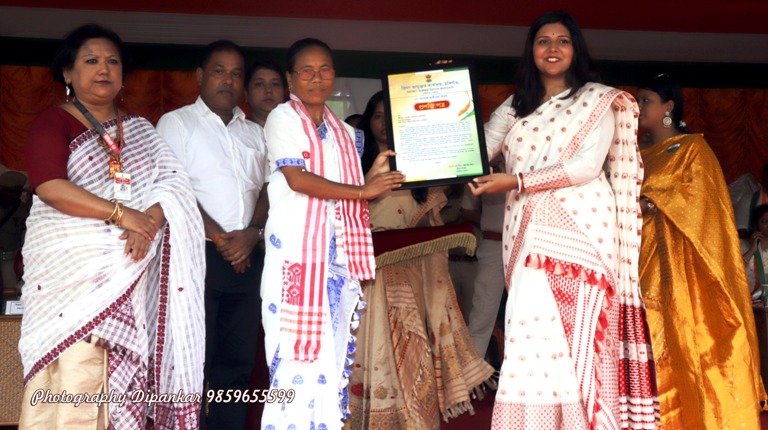
Honoured twice for her work in the field of HIV and also recognised for her contributions to the NSV and LS programmes, Patgiri says the biggest reward is the trust she receives from people.
“If I can do it, so can you. Take medicines on time and never lose faith in yourself,” she tells newly diagnosed patients.
Her daughter is now settled, and Patgiri is raising her granddaughter with a strong emphasis on education.
Her life offers several powerful lessons: HIV is not the end of life; self-confidence can help defeat discrimination; rights must be claimed; and personal hardship can be transformed into a source of strength for serving society.