
DMK refuses to budge on fair delimitation after meeting with Sonia, Rahul Gandhi
NEW DELHI, NOV 29 : In a dramatic last-ditch attempt to prevent a split in the Opposition ranks ahead of Parliament’s special session, Congress’s top leadership on Sunday descended on Chennai to persuade DMK chief MK Stalin to withdraw his support for the Centre’s revised delimitation Bill. But the high-profile outreach came to nought, with Stalin making it clear that his party would not change its position, leaving the INDIA bloc without the unity it had hoped to project on the eve of a crucial parliamentary showdown.
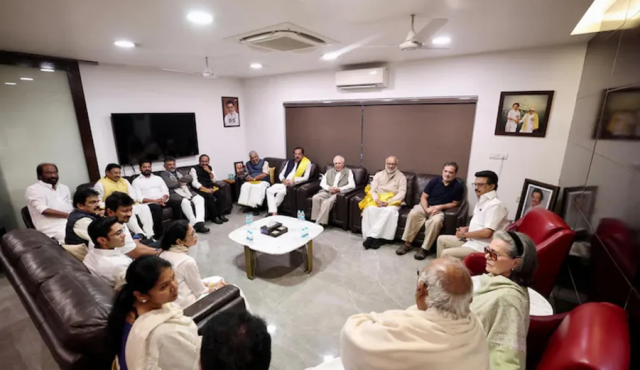
Congress Parliamentary Party chairperson Sonia Gandhi, party president Mallikarjun Kharge and Leader of Opposition in the Lok Sabha Rahul Gandhi were part of the delegation that met Stalin at his residence. They were accompanied by senior INDIA bloc leaders, including West Bengal Chief Minister Mamata Banerjee, CPM general secretary MA Baby, senior advocate Kapil Sibal and Congress leaders from southern states.
The meeting, which came after Congress’s decision to make a final appeal to its allies, was aimed at getting the DMK to join the Opposition’s campaign against the proposed constitutional amendments. The delegation’s arrival in Chennai, however, failed to produce the desired breakthrough.
Stalin, after the meeting, reiterated that the DMK would continue to support the revised Bill, arguing that the demands raised by the party had been incorporated into the government’s fresh proposal. He said opposing it could leave Tamil Nadu with even less protection over its parliamentary representation.
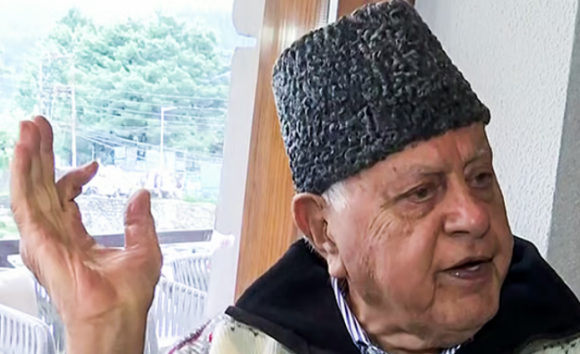
In a post-meeting statement shared by the DMK’s IT Wing, Stalin said the Congress leaders had met him to discuss the party’s stand on delimitation. He said the DMK had conveyed the resolution adopted at its MPs’ meeting a day earlier and explained the fight it had been leading over the issue.
“The DMK remains just as firm in its stance of #FairDelimitation,” the party said in a post on social media.
Stalin said the Congress leaders had accepted the DMK’s position, although they also discussed other concerns during the meeting. However, there was no indication of a breakthrough or any change in the DMK’s stand.
Stalin also gave a reason for the DMK’s position, warning that Tamil Nadu could risk losing its existing share if the proposed bill was defeated.
‘NO OTHER OPTION BUT TO SUPPORT BILL’, SAYS STALIN
Explaining the DMK’s position, Stalin said the party had conveyed its concerns to the Congress leadership and made it clear why it could not afford to oppose the revised legislation.
“Our stand is that if this Bill is defeated, we might even lose the share Tamil Nadu holds,” Stalin said, adding that the demands the DMK had raised from the beginning had been incorporated into the new Bill.
Calling it a “do or die” fight for the southern states, he said the DMK had “no other option but to support the Bill”.
The DMK has maintained that its support is linked to safeguards for Tamil Nadu’s representation in Parliament. The party had earlier warned that delimitation could reduce the state’s share of Lok Sabha seats from 39 to 31 or 32, bringing its parliamentary share down to between 5.71 per cent and 5.89 per cent.
In its latest explanation, however, the party said the revised proposal could increase Tamil Nadu’s Lok Sabha seats to 59 while protecting its existing share at up to 7.23 per cent. It also claimed the arrangement could ensure that the state’s representation would not be reduced for 25 years, until 2051.
Stalin had also responded to Rahul Gandhi’s appeal by thanking him for acknowledging the DMK’s role in protecting the Constitution and states’ rights. But he made it clear that Tamil Nadu’s interests would remain paramount.
“We have always made every decision keeping the interests of Tamil Nadu and our Tamil people as the foremost consideration,” he said, adding that the party would not compromise on this path.
RAHUL WARNS OF ‘END OF DEMOCRACY’, CONGRESS MAKES FINAL APPEAL
The Chennai meeting followed a decision taken at a meeting of INDIA bloc floor leaders at Kharge’s residence to reach out to both the DMK and the NCP (Sharadchandra Pawar) and make a final effort to bring them on board against the proposed legislation.
The outreach was significant because the Opposition is seeking to prevent the Centre from securing the numbers required to pass the constitutional amendment. The government needs a two-thirds majority among members present and voting.
Rahul Gandhi had made a public appeal to Stalin ahead of the meeting, warning that increasing the strength of the Lok Sabha to 850 seats would give the BJP and RSS an opportunity to redraw India’s electoral map to their advantage.
“An expansion to 850 seats will finish democracy in India. It will give BJP-RSS unlimited space to redraw India’s entire electoral map to their advantage,” Rahul said in a post on X.
“In the national interest, in Tamil Nadu’s interest and to protect the Constitution, we have to defeat this Bill together,” he added.
The Congress delegation’s visit came amid growing differences within the INDIA bloc over how to respond to the revised delimitation proposal, with the DMK insisting that the new Bill offered safeguards that were absent in the earlier proposal.
NCP(SP) ALSO BACKS BILL, NUMBERS BECOME KEY
The Congress’s difficulties extend beyond the DMK. The NCP (Sharadchandra Pawar), another party the INDIA bloc leadership had approached, is also among those backing the revised Bill.
With the DMK and NCP(SP) supporting the legislation, the Centre is projected to have the backing of 359 MPs, against the 360 votes required in a 540-member Lok Sabha, according to the numbers cited in the political calculations ahead of the session.
Apart from its own 322 MPs, the NDA is counting on support from the DMK, NCP(SP), JMM and YSRCP. The numbers underline why Congress’s last-minute outreach to its allies was crucial, even as the attempt to bring the DMK around failed.
PARLIAMENT SET FOR CRUCIAL SHOWDOWN FROM MONDAY
The political drama unfolded a day before the special sitting of Parliament begins on November 30, with the government set to introduce its revised legislative proposals on delimitation and women’s reservation.
The legislative package includes the Constitution (132nd Amendment) Bill, 2026, the Delimitation (Second) Bill, 2026, and amendments to laws governing Union Territories.
The proposals seek to increase the maximum strength of the Lok Sabha to 850 members, including up to 815 members from states and 35 from Union Territories. The government has argued that expanding the House would also facilitate the implementation of women’s reservation.
With the Congress failing to persuade key allies to abandon their support for the Bill, the Opposition enters Monday’s special session with its differences still unresolved.
-PTI