
From insurgency to inclusion: Odisha’s journey to a Naxal-free future
By Indus Valley Times Research Bureau
Bhubaneswar: Odisha becoming Naxal-free is not just the closure of a violent chapter. It marks the start of a bigger task — turning security success into lasting peace, development, and public trust.
For almost 20 years, Left-Wing Extremism cast a shadow over Odisha’s remote, forested areas. These regions faced violence, weak state presence, stalled development, and constant fear. Security forces made great sacrifices, while tribal and rural communities carried the heaviest burden.
Today, Odisha has reached a historic milestone.
On 31 March 2026, the State met the national deadline and was declared free from Naxal influence. The achievement was nationally acknowledged Union Home minister Amit Shah for this success.
This is a moment to celebrate — and to reflect.
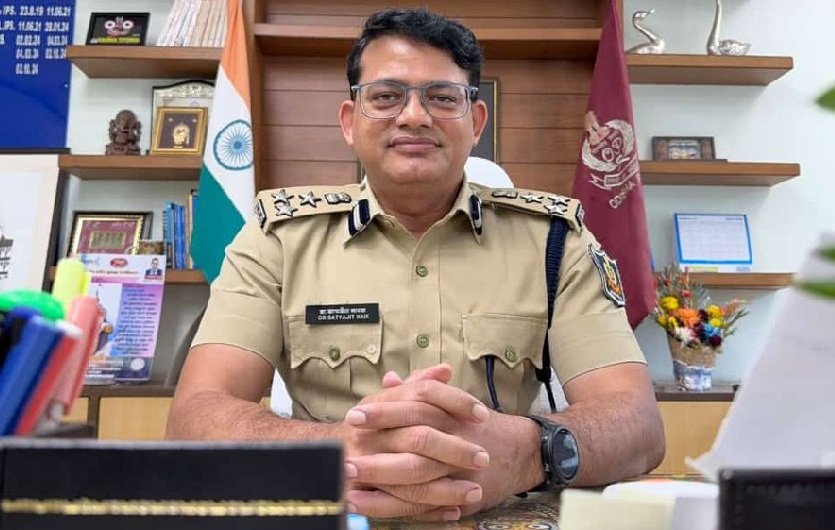
In his policy paper _“An Analysis of Naxal Insurgency in Odisha: A Multi-faceted Approach”_ submitted to ISB’s Bharti Institute of Public Policy, Dr. Satyajit Naik, IPS, IGP, Central Range, Kataka argued that Naxalism cannot be solved by policing alone. It needs a combined approach: strong security, better governance, socio-economic progress, community involvement, and addressing root causes of discontent.
The events of 2026 proved that approach right.
From Reactive Policing to a Whole-of-Government Model
Insurgencies grow where the State is absent, services are poor, and people feel cut off.
The paper recommended a multi-pronged strategy : short-term action with better intelligence, inter-agency coordination, and specialized forces; medium term focused on socio economic growth in impacted areas and long-term work through community policing to rebuild citizen-state trust through tackling the root causes of naxal insurgency addressing the issue of poverty,inequalities and marginalisation that have allowed flourish the idea of naxalism in these areas.
Odisha followed this model. The response shifted from reactive operations to a coordinated security grid. SOG, DVF, COBRA, CRPF, BSF and other forces worked together to dismantle Maoist networks. Odisha Police credits this teamwork for the final breakthrough.
But the real change goes beyond statistics.
Shrinking Footprint of Extremism
The area under Maoist influence reduced sharply.
Odisha achieved its Naxal-free status.
This isn’t just an operational win. It’s the return of the State to places where parallel authority once existed.
The Real Win: Governance Reaches People
The paper stressed that poor governance lets insurgents fill the void. The answer lies in pairing security with roads, schools, health centers, jobs, and digital access.
A new road means timely medical care and market access.
A police station means citizens can seek justice.
A school means fewer youth are lured into extremism.
A bank or mobile tower can do as much for stability as a security camp.
So the next goal must be to move from “Naxal-free” to “peace-secure.”
From Security Gains to Development Gains
Eliminating armed groups does not automatically erase poverty, unemployment, or distrust.
The medium-term plan must focus on jobs, infrastructure, health, education, forest rights, and fair rehabilitation. The long-term vision should be state-building, not just counter-insurgency.
Former “conflict zones” should now be known for tribal enterprise, tourism, forest livelihoods, sports, and digital growth.
Community Policing as the Bridge
The paper’s 3-tier “AMA Police” model is key for the post-Naxal phase. Security forces must now stay not because of threat, but because of partnership — with villagers, tribal leaders, youth, women, and local institutions.
Trust will be the biggest force multiplier.
Honoring the Sacrifice
This victory rests on the courage of police, COBRA, CRPF and other forces who served in tough terrain. Their sacrifice must guide future policy.
Guarding Against Complacency
Being Naxal-free doesn’t mean the risk is over. Vigilance must continue in vulnerable zones. CAPF and specialized units will remain to prevent any resurgence. Extremism can reappear through new grievances or technology.
The way forward: vigilance without fear, development without exclusion, policing with trust.
From Red Corridor to Growth Corridor
The narrative must change. The next generation should associate these areas with roads, schools, hospitals, tourism, and opportunity — not encounters. Forests can drive eco-tourism. Youth can become entrepreneurs and professionals.
31 March 2026 belongs to the people, police forces, and governments of Odisha and Government of India.
But sustaining it is a shared responsibility.
Naxal-free Odisha should not be the end goal. It should be the foundation for a more peaceful, connected, and inclusive Odisha.
That is how a security victory becomes a peace dividend.
That is how an insurgency ends — and a new social contract begins.