
50% increase in Lok Sabha seats, 25-year freeze: Govt’s big delimitation push
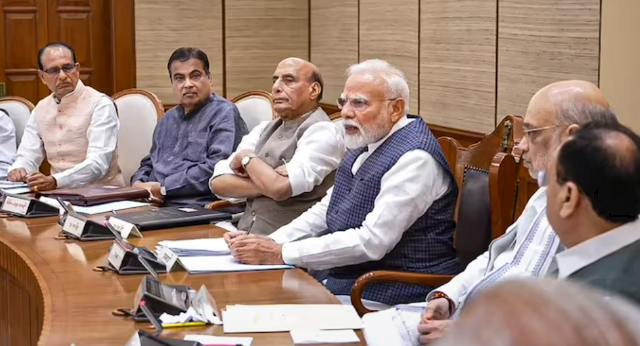
NEW DELHI, NOV 27 : In a big push to get the delimitation bill passed in Parliament next week, the Union Cabinet on Friday approved a proposal to increase the strength of the Lok Sabha by 50% uniformly across all states – a move that aligns with a major demand of the southern states. As per the fresh amendments, the allocation of seats will remain frozen for the next 25 years, until 2051.
By proposing that every state’s Lok Sabha seats will rise by 50%, the Centre has essentially delinked the delimitation exercise from the Census. The revised delimitation bill, which the Centre has linked to 33% women’s reservation in Parliament, is now set to be tabled in Parliament next week. The Centre has convened a mini-sitting, which will be an extension of the Monsoon session, on November 30.
CENTRE ADDRESSES KEY CONCERN OF SOUTH
The proposed bill will raise the Lok Sabha to 850 seats. The Centre had tabled the Constitution (131st Amendment) Bill in April in a special session of Parliament.
owever, it was defeated by a united opposition, which objected to the law’s implementation being tied to the next Census. It was the first time that a bill brought by the Modi government had failed.
The southern states previously argued that linking the delimitation exercise to the Census would unfairly benefit the North, where population growth has been higher. The southern states, meanwhile, have historically performed better in population control.
Thus, the southern states feared they could lose some of their proportional share if seats were redistributed purely as per the population.
However, the question is not merely of percentage increase, but of proportionality between states. This aspect was also raised by the opposition earlier this year.
The size of the Lok Sabha was last changed in the 1970s, when it was set at 543 seats based on the 1971 census. Since then, any change has been put off twice.
DOES NDA HAVE THE NUMBERS IN PARLIAMENT?
Presently, the effective strength of the Lok Sabha is 539. The NDA needs around 358 votes to secure a two-thirds majority.
The NDA is sure of 319 members. It includes 20 of the Trinamool Congress’s 28 MPs, who have joined a separate party, the NCPI. The NCPI is backing the NDA. It can count one more MP from Punjab’s Shiromani Akali Dal, which re-entered the NDA this week.
The big question is whether the eight MPs of Sharad Pawar’s NCP and the 22 MPs of the DMK will support the bill. Their key demand of an equal 50% increase in Lok Sabha seats across all states has now been accepted by the Centre.
If both NCP (SP) and DMK back the bill, the total will come close to 350. The NDA, however, will still be short of 8-9 MPs.
The remaining votes will now have to come from outside. If some parties abstain, it could also bring down the required threshold. Overall, the equation looks more rosy for the NDA than it did in April.
WILL DMK AND SHARAD PAWAR’S NCP BACK BILL?
But will the DMK and the NCP(SP) break ranks with the INDIA bloc to support the bill? Both the parties have sent feelers if their demands are met.
Earlier today, DMK chief MK Stalin clarified the party’s two demands for backing the delimitation bill.
The former Tamil Nadu chief minister said the state’s existing 7.18% share of seats in the Lok Sabha must not be reduced even if the total number of constituencies is increased.
He also said that the existing proportion of parliamentary representation, based on the 1971 Census, should remain frozen for another 25 years.
Both these demands seem to be addressed by the latest amendments made by the Union Cabinet.
Sources in the NCP(SP) also told India Today that it was ready to support the government if its key concerns were addressed. The 50% formula demand has already been met.
The party’s other demands included 50% reservation for women instead of the proposed 33% and opposition representation in the delimitation commission.
It now remains to be seen if the Centre manages to get the two parties on board ahead of the Parliament session.
-PTI