
From scarcity to security: How water is rewriting lives in Sijimali
By Dr Gourang Charan Rout
From long, exhausting treks for a pot of water to doorstep access powered by the sun—villages in Sijimali are witnessing a quiet transformation where dignity flows as freely as water
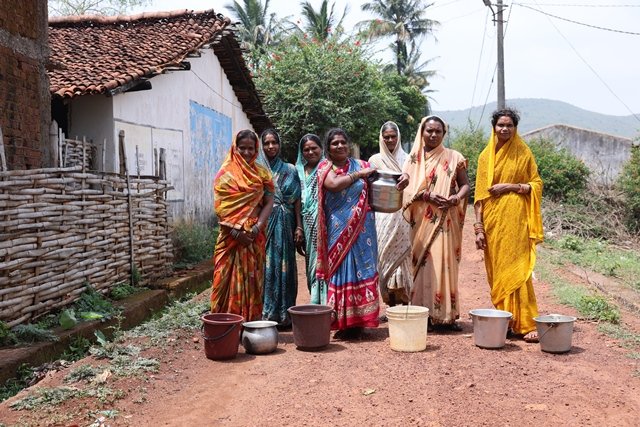
Kashipur (Rayagada, Odisha): In the remote villages of Kashipur block in Odisha’s Rayagada district, mornings once began with a struggle. Before sunrise, women would set out with plastic and steel containers, navigating steep, rugged hill paths to fetch water from distant streams. For residents of Dumerpadar, Sagabari, Chulbadi, Sunger, Dhamanghati, Siadimal and Ladakhaman, water was never assured—it was uncertain, seasonal, and often far away.
For women, who bear the brunt of household responsibilities, this daily ordeal consumed hours, draining both time and energy. Opportunities for livelihood, rest, or personal wellbeing were often sacrificed at the altar of necessity.
That reality is now beginning to change.
In the Sijimali hill range—an area rich in bauxite but historically plagued by water scarcity—Vedanta Aluminium has introduced a series of targeted interventions aimed at ensuring reliable access to safe drinking water. The region’s plateau terrain, typical of the Eastern Ghats, prevents rainwater from seeping into the ground. Instead, it runs off quickly, leaving groundwater levels plunging as deep as 750 feet, far beyond the reach of traditional wells.
To address this, Vedanta Aluminium has implemented deep-bore wells supported by solar-powered pumping systems under its community initiative, Project Nirmal. These systems, now operational in seven villages, are providing year-round access to safe drinking water to over 3,000 residents—reducing dependence on erratic and climate-sensitive sources.
“Earlier, fetching water would take up half the morning,” recalls Chandrika Naik of Dumerpadar. “In summer, we had to walk even farther. By the time we returned, the day was nearly over. Now, things have changed—it has been a real boon for us.”
Beyond improving access, the initiative has also enhanced water quality. Earlier, villagers relied on sources with high turbidity—cloudy water carrying silt and impurities. Today, borewell-linked purification systems ensure that drinking water meets safe standards. Solar-powered infrastructure has further eliminated reliance on inconsistent electricity supply, a major constraint in remote regions like Kashipur and Thuamul Rampur.
“We no longer wait for hours for power or tankers,” says another resident. “Water is now available closer to our homes. It has changed how we live and plan our day.”
The impact extends beyond convenience—it is reshaping lives, especially for women. Reduced walking distances and shorter collection times have eased the physical burden, allowing women to devote more time to income-generating activities, family care, and their own wellbeing.
Looking ahead, the focus is not just on access, but sustainability. Hydrogeological studies are guiding efforts such as spring rejuvenation, rainwater channelisation, and groundwater recharge planning. Over 20 locations have been identified for such interventions, aimed at strengthening natural water systems and building long-term resilience against seasonal shortages.
Importantly, technical assessments indicate that groundwater aquifers lie well below the bauxite deposits near the surface, ensuring that water sources remain protected. This insight has helped shape development planning in the region, balancing resource use with community needs.
Sijimali, often viewed through the lens of its mineral wealth, is gradually redefining its narrative. As water, healthcare, infrastructure and essential services improve, the region’s progress is increasingly measured not by what lies beneath the ground, but by the quality of life above it.
In these villages, the journey for water is no longer a daily burden—it is a story of change, resilience, and the quiet arrival of dignity.