
Beyond Love: The Timeless Spiritual Wisdom of Radha and Krishna
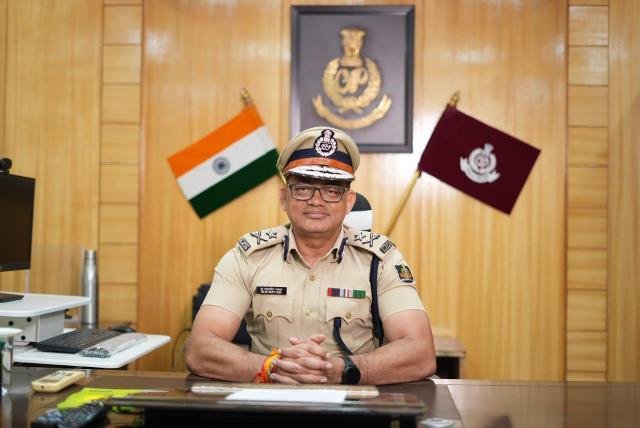
By Dr Satyajit Nayak.IPS
Jajpur/ Odisha,Sept. 1 : Across thousands of years, the love story of Radha and Krishna has inspired poets, saints, philosophers, and ordinary seekers alike. From the lyrical verses of Jayadeva’s Gita Govinda to the ecstatic devotion of Sri Chaitanya Mahaprabhu, from the miniature paintings of Rajasthan to the living traditions of Vrindavan’s temples, this divine relationship continues to shape how millions understand love, faith, and the human connection to the sacred.
Yet the story of Radha and Krishna is far more than a celestial romance. It is a profound spiritual teaching expressed through the language of love. Every dimension of their relationship—the joy of union, the anguish of separation, the selflessness of devotion, and the courage to let go—offers lessons that remain deeply relevant to our lives today.
The Brahma Vaivarta Purana describes Radha as the Hladini Shakti, the pleasure-giving potency of the Supreme, suggesting that her love is not merely an ordinary human emotion but an expression of divine bliss itself.
Whether you approach their story as a devotee, a student of Indian philosophy, or simply as someone seeking deeper meaning in relationships, the teachings embedded in the Radha Krishna tradition offer timeless guidance. To explore the emotional depth of their bond, you may also wish to read our detailed account of Radha’s separation from Krishna, which explores the spiritual significance of longing in devotion.
Scriptural Context: The teachings in this article draw from Jayadeva’s Gita Govinda, the Brahma Vaivarta Purana, the Srimad Bhagavatam (Bhagavata Purana), and the devotional theology of Sri Chaitanya Mahaprabhu and the Gaudiya Vaishnava tradition. Together, these sources provide the theological and philosophical foundation for the life lessons explored below.
The Power of Unconditional Love
One of the most profound lessons from the Radha Krishna story is the nature of unconditional love.
Radha’s love for Krishna was never transactional. She did not love him because he was a prince, a divine being, or because he could offer her material security. Her love existed as a force unto itself—pure, unfiltered, and free from the expectation of return.
In the Gita Govinda, Jayadeva portrays Radha’s love as all-consuming yet deeply selfless. She does not demand that Krishna remain with her, nor does she place conditions on her affection. Her love flows like a river toward the ocean—naturally, inevitably, and without asking for anything in return.
The Brahma Vaivarta Purana elevates this idea further by describing Radha’s love as the original expression of prema (divine love), distinguished from kama (desire) because it seeks nothing for itself.
In modern life, we often attach conditions to love—expecting reciprocation, demanding proof of loyalty, or withdrawing affection when our needs are not met. Radha’s example challenges us to consider a higher possibility: that love, in its truest form, can be given freely, without keeping a ledger of debts and repayments.
This does not mean tolerating mistreatment or abandoning healthy boundaries. Rather, it means cultivating a quality of heart that loves for the sake of loving and finds its reward in the act of devotion itself.
The Spiritual Power of Separation
One of the most poignant aspects of the Radha Krishna narrative is the theme of viraha—the pain of separation.
After Krishna departed from Vrindavan for Mathura to fulfill his divine mission, Radha remained behind. By all outward appearances, they were separated. Yet the Vaishnava tradition teaches that their love not only survived this distance but was intensified by it.
Sri Chaitanya Mahaprabhu, the 15th-century saint regarded by Gaudiya Vaishnavas as a combined incarnation of Radha and Krishna, taught that vipralambha (love in separation) can be an especially intense experience of devotion.
In separation, the beloved is held not in the arms but in the heart. Every moment becomes suffused with remembrance. Every breath becomes a prayer.
The Srimad Bhagavatam describes how the gopis of Vrindavan, led by Radha, experienced Krishna’s absence as an all-encompassing meditation—their thoughts, words, and actions centered on him even though he was physically far away.
This lesson speaks directly to our experience of loss, distance, and longing. Whether through the passing of a loved one, the end of a relationship, or simple geographical distance, we all know the ache of separation.
Radha teaches us that physical absence does not necessarily diminish genuine love; in some circumstances, it can deepen it. The connections that truly matter are not dependent entirely on proximity. They live in consciousness, in the heart, and in the fabric of our being.
Devotion as a Way of Life
The Radha Krishna story is, at its theological core, a supreme illustration of bhakti—the path of devotion.
In the broader Hindu philosophical framework, there are multiple paths to spiritual realization, including jnana yoga (the path of knowledge), karma yoga (the path of selfless action), and bhakti yoga (the path of loving devotion).
The Gaudiya Vaishnava tradition, drawing from the teachings of Sri Chaitanya, places bhakti at the heart of spiritual realization.
Radha embodies bhakti in its purest form. Her devotion is not motivated by a desire for liberation (mukti), mystical powers (siddhis), or even a place in the divine realm. She loves Krishna because loving Krishna is the natural expression of her being.
The Brahma Vaivarta Purana describes her as inseparable from Krishna—not as a subordinate, but as his essential counterpart, the Hladini Shakti through whom divine bliss is experienced.
For us, this lesson translates into the understanding that wholehearted devotion—whether directed toward the divine, a purpose, a craft, or a loved one—can bring profound fulfillment.
Half-hearted engagement often leads to half-hearted results and satisfaction. When we devote ourselves fully, holding nothing back, we access a depth of experience and meaning that surface-level involvement can never provide.
To explore whether Radha’s love represents the highest form of devotion, see our analysis of whether Radha’s love for Krishna is the highest form of love.
Chaitanya’s Teaching: Sri Chaitanya Mahaprabhu demonstrated through his own life that deep spiritual realization does not require the rejection of emotion. Instead, it can involve the complete embrace and transformation of divine love. His ecstatic chanting of the Hare Krishna Maha Mantra became a living expression of devotion accessible to people regardless of caste, birth, or scholarship.
The Beauty of Selflessness
Selflessness is woven into every dimension of the Radha Krishna relationship.
When Krishna left Vrindavan, Radha did not pursue him or demand that he abandon his mission for her sake. She understood that his purpose extended beyond their personal relationship and accepted that purpose even at the cost of her own happiness.
This is not passive resignation. It is an active and conscious willingness to place the well-being and purpose of the beloved above one’s own immediate desires.
Krishna, too, demonstrated profound generosity. The Srimad Bhagavatam describes how he multiplied himself during the Rasa Lila so that every gopi could experience his undivided attention. He did not hoard his love or distribute it selectively according to what he might gain.
In our own relationships, selflessness does not mean self-erasure. It means being willing to consider the needs, growth, and happiness of others alongside our own.
It means celebrating a partner’s success without jealousy, supporting their journey even when it takes them in a direction different from our plans, and finding genuine joy in their happiness.
The Radha Krishna model reminds us that the deepest fulfillment in love often comes not from what we receive, but from what we are able to give.
Finding the Divine in Everyday Life
The love between Radha and Krishna did not unfold in temples or palaces. It blossomed in the forests and pastures of Vrindavan—among cows, rivers, kadamba trees, and the simple rhythms of rural life.
The Gita Govinda sets their encounters against a backdrop of blooming lotuses, moonlit riverbanks, and the fragrance of jasmine carried on evening winds.
The sacred was not separate from the ordinary; it was revealed through the ordinary.
This is a deeply important lesson for contemporary life. We often compartmentalize spirituality, confining it to designated times and places—a morning meditation, a weekend temple visit, or an annual pilgrimage.
But the Radha Krishna story suggests that the divine can be experienced through every moment and every place.
A meal prepared with love can become an offering. A conversation held with genuine presence can become a form of worship. The beauty of a sunset or the laughter of a child can become a moment of revelation if we have the eyes to see it.
The Gaudiya Vaishnava tradition teaches that Vrindavan is not merely a geographic location in Uttar Pradesh; it can also be understood as a state of consciousness in which every action becomes an expression of love for the divine.
When we bring this awareness into our daily routines—cooking, working, walking, and relating to others—our entire life can become a spiritual practice.
For those drawn to experience this consciousness firsthand, the sacred land of Vrindavan continues to hold a living spiritual tradition. Explore our spiritual retreat offerings to immerse yourself in this tradition.
The Courage to Love, Hold On, and Let Go
The love story of Radha and Krishna is not a fairy tale with a neat, conventional ending. It is something far more powerful: a spiritual teaching about what it means to love, surrender, hold on, and let go.
The lessons explored here—unconditional love, the power of separation, devotion, selflessness, finding the divine in everyday life, the courage to love despite impermanence, the grace of release, and the transformative nature of love—invite us to live with greater depth, authenticity, and spiritual awareness.
These teachings are not confined to one religious tradition or cultural context. They speak to the universal human experience of love and loss, connection and solitude, holding and releasing.
Whether we encounter them through the Gita Govinda, through Chaitanya’s ecstatic kirtan, through the quiet contemplation of a Vrindavan sunrise, or through the daily practice of loving those around us with greater generosity and less expectation, the lessons of Radha and Krishna remain timeless.
Their story reminds us that true love is not merely about possession or proximity. It is about devotion, remembrance, selflessness, surrender, and transformation.
And perhaps that is why, after centuries, the love of Radha and Krishna continues to speak so powerfully to the human heart.
Beyond the story of two divine figures lies a timeless wisdom: love can become devotion, separation can become remembrance, surrender can become strength, and the human heart can become a doorway to the divine.