

India gets a new rocket: Skyroot’s Vikram-1 performs textbook launch on first try
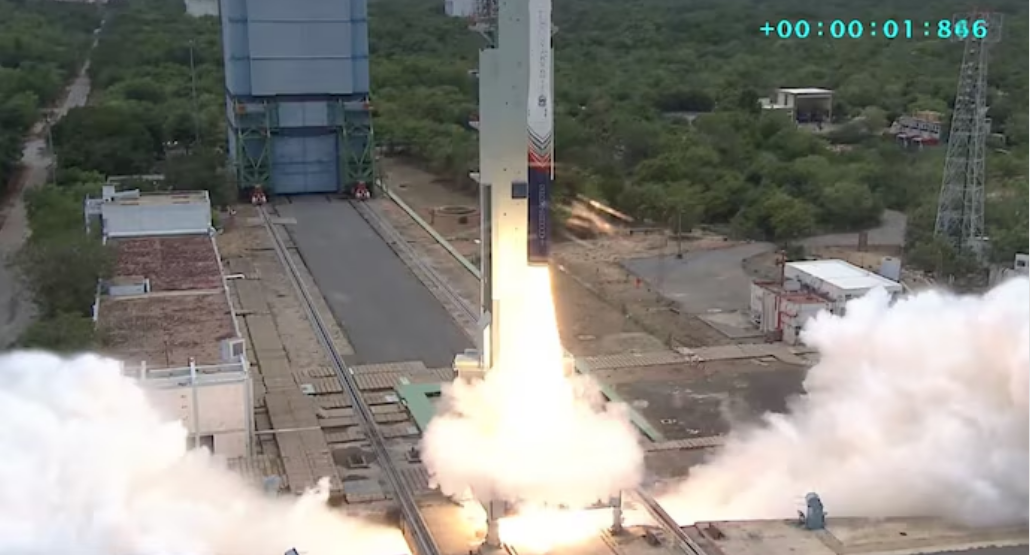
NEW DELHI, JULY 18 : India’s private space sector reached a defining milestone on Saturday as Skyroot Aerospace successfully launched Vikram-1, the country’s first privately developed orbital-class rocket, from the Satish Dhawan Space Centre (SDSC-SHAR) in Sriharikota.
The rocket not only aced the launch but also satellite deployment, with all four stages performing nominally on first attempt.
The landmark mission, named Mission Aagaman, marks the arrival of Indian private industry into the orbital launch business, placing the country among a select group where commercial companies have independently developed and launched orbital rockets
As Vikram-1 soared into the sky atop a pillar of flame, years of engineering, testing and innovation culminated in a moment that could reshape India’s future in space transportation.
Prime Minister Narendra Modi, in a call, congratulated the Skyroot team on the grand success of the mission in the maiden attempt. The prime minister said Pawan and Bharat, you have not only planted a new tree in space, but also a new root has been strengthened on the ground to inspire the new generation.
The launch took place after an internal hold triggered a short delay. However, all stages performed nominally, with the separations being precise and clean. The young team, elated with the success of the maiden flight, has delivered a new rocket to India that will change spaceflight.
Standing nearly seven storeys tall, Vikram-1 is an all-carbon composite, multi-stage launch vehicle capable of placing payloads weighing up to 350 kilograms into Low Earth Orbit. The rocket is powered by propulsion systems developed entirely in-house, including advanced 3D-printed rocket engines and high-performance solid rocket motors.
The maiden test flight carried several technology demonstration payloads from Grahaa Space, Cosmoserve, DCubed, and Skyroot’s own SCOPE experiment. Also onboard were symbolic payloads, including Prime Minister Narendra Modi’s handwritten “Vande Mataram” postcard, handwritten messages from current and former ISRO chairmen, Indian astronauts, Skyroot employees, investors and supporters from around the world.
Beyond validating the rocket’s performance in flight, the mission is expected to provide critical engineering data that will help Skyroot refine the Vikram launch vehicle family and establish a regular commercial launch cadence.
The successful mission also represents a major victory for India’s space sector reforms, which opened the doors for private companies to build rockets, satellites and launch services alongside ISRO.
Skyroot was founded in 2018 by former ISRO scientists Pawan Kumar Chandana and Naga Bharath Daka, who envisioned making access to space more affordable, reliable and responsive for the rapidly growing small satellite market. The company first made history in 2022 when its Vikram-S became India’s first privately built rocket to reach space.
-PTI