
International Odissi Dance Festival: Rabindra Mandap vibrates with rhythm & thrill
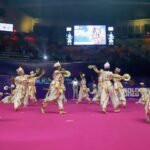
Often described as an “Odissi Kumbh Mela,” the festival brought together eminent dancers from India and abroad, presenting Odissi in solo, duet and group formats.
By Nalini Sahu
Bhubaneswar: Rabindra Mandap reverberated with rhythm, grace and quiet intensity as the five-day International Odissi Dance Festival drew to a close on December 30, turning the city into a confluence of tradition and contemporary interpretation. Organised by the Guru Kelu Charan Mohapatra Odissi Research Centre (GKCMORC) under the aegis of the Department of Odia Language, Literature and Culture, the festival once again asserted Bhubaneswar’s centrality to the classical dance form’s global journey.
Often described as an “Odissi Kumbh Mela,” the festival brought together eminent dancers from India and abroad, presenting Odissi in solo, duet and group formats. Across five days, audiences witnessed a rich spectrum of stylistic interpretations rooted in the legacy of Guru Kelu Charan Mohapatra, whose vision continues to shape the evolution of the form.
The concluding day unfolded in three sessions, each offering a distinct aesthetic experience. The morning segment highlighted emerging and mid-career dancers, with group and solo presentations that showcased technical rigour, sculptural poise and emotive abhinaya. Performances by ensembles such as Lingaraj Kala Niketan and Debarchana Dance Academy, alongside solos and duets by young practitioners, reflected the depth of training and the form’s steady generational transmission.
The afternoon session sustained the momentum with a blend of research-oriented group works and individual presentations. Institutions such as Natasutra Research Public Charitable Trust and Nrutyarchana complemented solo and duet performances that explored both classical repertoire and nuanced thematic expression, drawing warm appreciation from connoisseurs.
The evening programme, however, emerged as the emotional and artistic crescendo. Veteran Odissi exponent Guru Aloka Kanungo set the tone with a performance marked by restraint and depth, reaffirming the enduring power of classic vocabulary when shaped by lived experience. The stage then saw a succession of solo and duet presentations by accomplished dancers from Odisha and beyond, reflecting the form’s expanding geographical footprint while remaining anchored in its spiritual and aesthetic core.
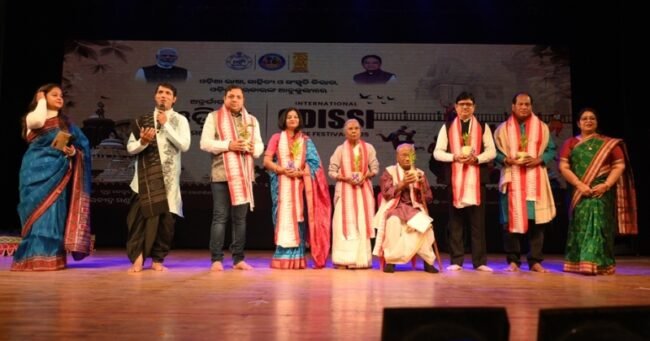
The concluding evening began with the ceremonial lighting of the lamp by eminent artistes and cultural administrators, including noted vocalists Dr. Shyamamani Devi and Guru Gopal Chandra Panda, former principal secretary Manoranjan Panigrahy, distinguished Odissi gurus Bichitrananda Swain and Dr. Jyotsnarani Sahoo, Odisha Sangeet Natak Akademi secretary Dr. Chandrasekhar Hota, and GKCMORC administrative officer Suchisimita Mantry—a symbolic gesture underscoring the shared custodianship of Odisha’s cultural heritage.
What stood out throughout the festival was not merely the technical excellence on display but the dialogue between continuity and change. While the choreography remained deeply rooted in traditional grammar—tribhangi, chowka, and lyrical expressiveness—many performances subtly engaged with contemporary sensibilities, reaffirming Odissi’s capacity for renewal without rupture.
Large and attentive audiences thronged Rabindra Mandap each day, reflecting a sustained public engagement with classical arts in Odisha. For visiting dancers, the festival offered more than a performance platform—it functioned as a pilgrimage to the source, a return to the cultural soil from which Odissi emerged.
As the curtains fell on this year’s edition, the International Odissi Dance Festival once again underscored Bhubaneswar’s role as both guardian and global ambassador of the classical form—where devotion, discipline and dynamism continue to move in graceful synchrony.