

Tata Power clarifies Additional Security Deposit levy, calls it statutory
By A.K Sahoo
Bhubaneswar, Dec. 18: Tata Power’s Odisha distribution companies on Thursday sought to allay consumer concerns over the levy of Additional Security Deposit (ASD) in electricity bills, asserting that the mechanism is a statutory requirement under the Electricity Act, 2003 and is regulated by the Odisha Electricity Regulatory Commission (OERC).
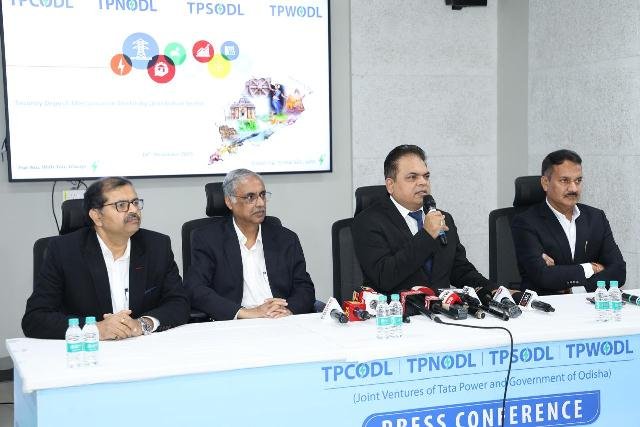
Addressing a media conference here, the heads of the four Tata Power DISCOMs operating in the state said the adjustment of Security Deposit (SD) and the imposition of ASD are linked to consumers’ electricity usage and the prevailing tariff structure. Consumers whose power consumption declined in the previous financial year are entitled to adjustment or refund of excess security deposit through their bills, while those with higher consumption are required to furnish additional security as mandated by regulatory norms.
The clarification comes amid protests by the opposition Biju Janata Dal and certain consumer bodies over the ASD levy.
DISCOM officials said consumers continue to earn interest on their security deposits, which is credited annually to their electricity bills as per regulatory provisions. All amounts collected towards SD and ASD are kept as fixed deposits with scheduled banks, ensuring full protection of consumer funds. These deposits, they emphasised, are not used for operational or any other purposes.
Security deposits, along with accrued interest, are fully refundable when a consumer surrenders or disconnects an electricity connection. Officials also highlighted the availability of prepaid electricity connections, which do not require any security deposit or ASD, offering consumers greater flexibility.
During 2024–25, an interest amount of Rs 217.29 crore was credited to electricity bills across Odisha at an annual rate of 6.50 per cent.
Speaking on the occasion, Gajanan Kale, Chief – Odisha Distribution Business, Tata Power, said the company serves nearly one crore consumers in the state and follows robust regulatory mechanisms to ensure uninterrupted power supply. He said the annual review of security deposits is a mandatory regulatory exercise aimed at protecting consumer interests while ensuring business continuity. The security deposit earns interest at 6.50 per cent per annum, which is adjusted in electricity bills during the first quarter, with excess amounts arising from reduced consumption also adjusted.
Officials noted that the framework governing SD and ASD is neither new nor discretionary and has been in place for decades, including during the tenure of erstwhile utilities such as CESU, NESCO, SOUTHCO and WESCO. Consumers notified for ASD are required to make payments within the stipulated period, failing which a surcharge of 15 per cent per annum is applicable on outstanding amounts, in accordance with statutory provisions.
——————
Photograph: Senior officials of Tata Power’s four DISCOMs addressing the media in Bhubaneswar on Thursday.